
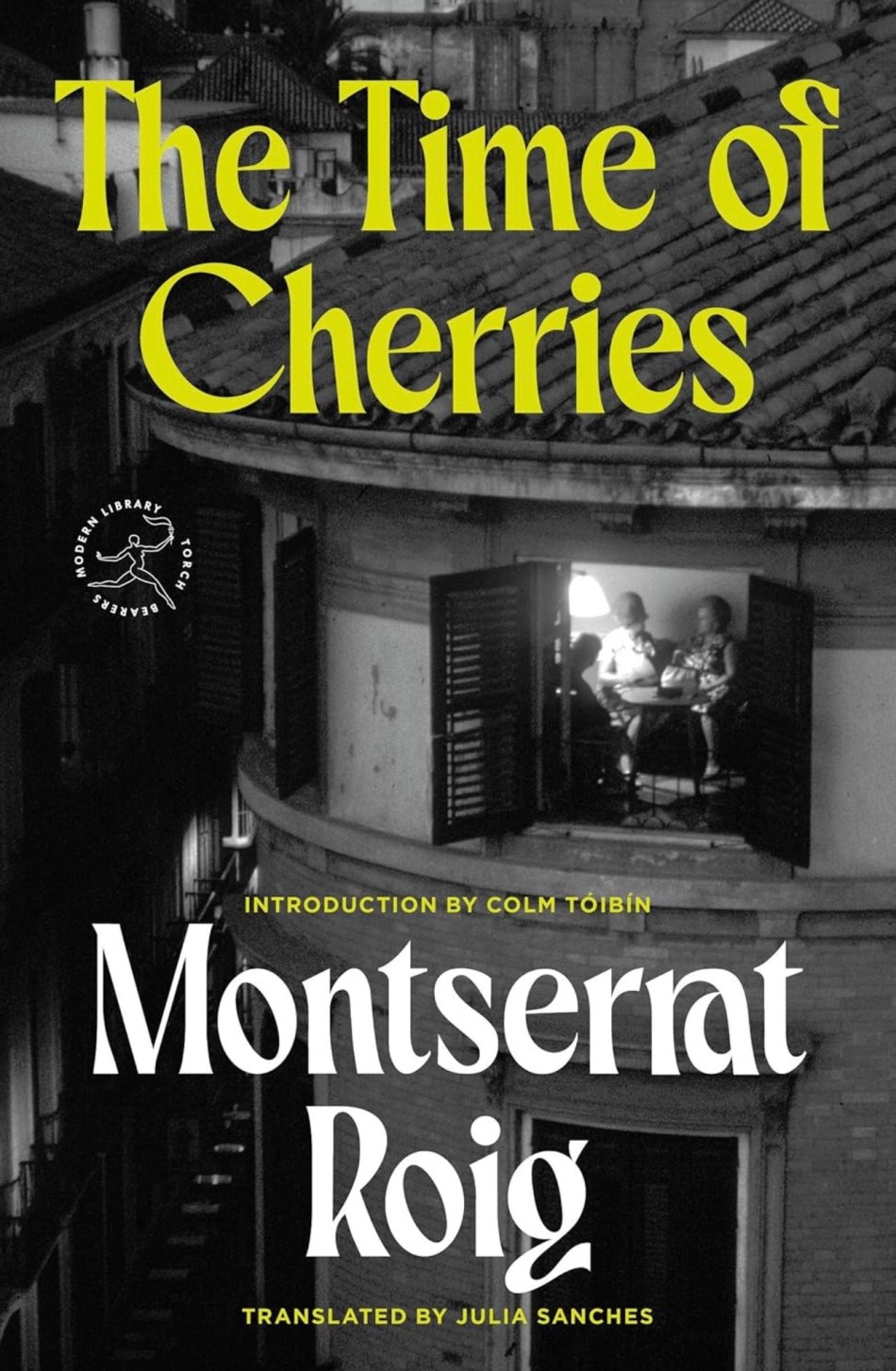
For bookworms looking for suggestions, I cannot recommend more highly “The Time of Cherries” by Spanish author Montserrat Roig, first published in Spain in 1976. The story follows the return to Barcelona of Natàlia Miralpeix, who spent years abroad in self imposed exile following a rupture with her family. The time of the novel is set in 1974, the twilight of the fascist dictatorship of Francisco Franco. Natàlia returns to Spain only days after Franco has savagely executed Catalonian anarchist Salvador Puig Antich by way of garrote (which slowly strangles the victim).
It is unclear what Natàlia expects to find upon her return. She fled in her youth and returns in mid life after years abroad living freely and unfettered, first in France, later in England. We sense she harbours a shred of hope that change is on its way, despite the death sentence imposed on Puig Antich (which was overturned by Spain in 2024). We discover, through vignettes of Natàlia’s bourgeois family, how time has amplified the farce of fascism in Spain, the people and the place have grown like barnacles on sinking ship. The sad, meaningless existential rut of going along to get along for sake of economic prosperity are on full display in the affluent lives of her brother Lluís and sister-in-law Silvià, as is the cruel despair in the lives of the poor and powerless left behind. The scene where Silvià and her bougie friends ditch their husbands to partake in a booze-filled game of witless charades was hysterical.
It all sounds so tragic, so bathetic, but Roig manages to paint the characters and the canvas of 1970’s Barcelona with masterstrokes of texture and colour. Characters and places are at once stolid and crumbling, yet vivacious and brimming with life. Roig mocks with empathy; she lampoons with heart, which is no easy feat. We know Natàlia is utterly fed up with her family and her country, but also madly in love with them. She left, vowing never to return to a place that made her feel like a prisoner, but could not escape the emotional pull of home. She is ambivalent about the moral and spiritual cost of her country trading away its freedom and political agency for affluence. The reader senses she believes it was not worth it; that her country, and her family, has lost its soul. Many of us in modern times, with its billionaires feeding on the lives of hundreds of millions like insatiable parasites, should be able to relate.
The book ends off on a deeply psychological note. The inner life of Natàlia’s father takes us through the pain of loss and regret, the bittersweet taste of memory, the yen for better times. Her father’s fate is a metaphor for that of her country, no doubt. The lesson is, if principle is abandoned when it is most needed the heart grows cold in ways time cannot redeem. The trail left behind is a mad descent to death by rueful nostalgia.
I had never heard of Montserrat Roig before reading this novel, which I gobbled up like an indelible feast. My interest was piqued by a swooning review in the Atlantic by Irish writer Colm Tóibín, whose writing I adore. I did not want this book to end, but when it did I was madly in love with the art and the artist who created it. The final part of the book was so poignant and beautiful it brought me to tears. It is obvious, even to an outsider like me, why this book became an instant classic in Spain. The English translation of Roig’s 1972 novel “Goodbye Ramona” is coming out this August and I have already pre-ordered it.


0 comments on “Review: The Time of Cherries”